Watertown at a Glance
A City, A Town, And Both
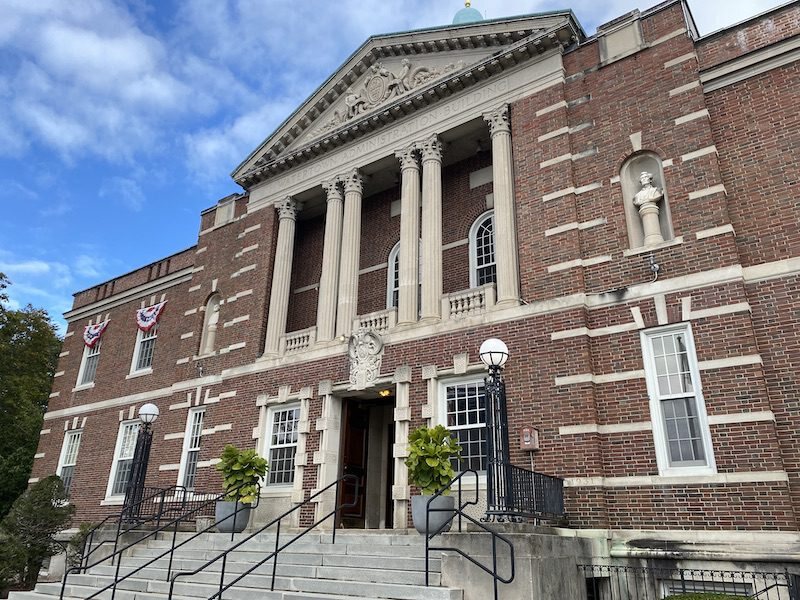
Watertown is governed by a council–manager system: an elected City Council sets policy and a professional City Manager runs the departments. But for most of its history it called itself a town, and in November 2021 voters formally adopted the name “The City of Watertown” — the same charter move that renamed the Select Board the City Council. The old wording survives all over the place, including in program listings, so don’t be thrown if a page says “Town.”
The practical consequence for families is the one that shapes this whole guide: the city’s recreation department and the school district are two separate organizations with two separate registration systems, and the volunteer sports clubs are a third, fourth and fifth. More on that below.
How It Got Here
Watertown was settled in 1630 as the Saltonstall Plantation, making it one of the oldest English settlements in Massachusetts. Its motto is In pace condita — “founded in peace.”
In 1632 the residents refused to pay a tax levied on them by the colonial government, a stand that has been described as the first protest in America against taxation without representation. It is a genuinely local piece of history and Watertown is fond of it.
Schools
Watertown Public Schools runs three elementary schools — Cunniff, Hosmer and Lowell — plus Watertown Middle School and Watertown High School. The district serves roughly 2,600 students; the high school alone enrolled about 760 in 2023–24.
Those three elementary names matter more than they look. Almost every after-school enrichment listing in this guide is tied to one specific school, so which elementary your child attends decides which courses they can actually take. The school district also operates the Phillips Building, which appears in the listings as a program site.
Watertown High School’s teams are the Raiders, wearing black and red. School teams are open only to enrolled pupils.
Neighborhoods
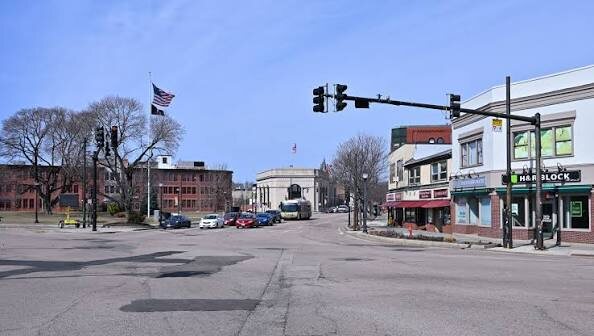
The city organises around its squares and ends: Watertown Square, Coolidge Square, East Watertown, Bemis and the West End. Watertown Square sits at the Charles River and functions as the center of town; Arsenal Street runs east toward the Cambridge line and carries most of the modern retail, including the Watertown Mall and the redeveloped Arsenal Yards.
The River, the Cemetery, and an Armenian Watertown
The Charles River forms Watertown’s southern boundary with Brighton. The Mount Auburn Cemetery — 151 acres, founded 1831, and the first landscaped rural cemetery in the United States — is the city’s largest single piece of open ground. Gore Place, an 1806 estate, holds 45 acres, most of it in Watertown.
Watertown is also home to the third-largest Armenian community in the United States, roughly 7,000–8,000 people. That presence is visible in institutions rather than slogans: the Armenian Library and Museum of America, St. Stephen’s Armenian Elementary School, and the Armenian Mirror-Spectator, one of the oldest Armenian newspapers in the world. It shows up in this guide too — the ABAKA Armenian Dance Academy is a Watertown program.
Sources: Wikipedia — Watertown, Massachusetts, U.S. Census Bureau — Vintage 2025 Population Estimates, Wikipedia — Watertown High School, Watertown Public Schools

How Youth Sports Works in Watertown
Five Systems, Not One
There is no single Watertown signup. Depending on the activity, a family ends up in one of these, and none of them talk to each other.
1. Watertown Recreation is the city department, registering through rec.us. It runs the largest share of the listings in this guide — classes, clinics and camps — and it is the only system with a published resident/non-resident split and a scholarship policy.
2. Watertown Community Education belongs to the school district, not the city. It registers through Eleyo and runs after-school enrichment at Cunniff, Hosmer and Lowell. This is the single most important distinction on this page: signing up for a city program and signing up for a school-district program are two different accounts on two different websites.
3. The Boys & Girls Club at 25 Whites Avenue runs its own after-school care and school-break days on its own membership system, with an annual membership fee separate from program fees.
4. The independent clubs — Watertown Youth Soccer, Watertown Youth Hockey, Watertown Youth Baseball & Softball — each run their own registration, their own fees and their own calendar. The city publishes a directory of them; the directory is a list, not a shared signup.
5. Private providers book directly: the Mosesian Center for the Arts, Evolve Gymnastics, the Fencing Academy of Boston, Allez Fencing, O’Riley Irish Dance and ABAKA Dance Academy each take their own registrations.
One Thing To Know Before You Look For Adaptive Programs
Watertown’s adaptive and inclusive recreation is delivered jointly with Belmont. S.P.O.R.T. and the Recreation Therapy programs are run through Belmont’s recreation system and mostly held at Beech Street Center in Belmont. They genuinely serve Watertown families — but a Watertown parent should know before registering that the drive is to Belmont, not across town. Every one of those listings on this site carries its actual venue, so it is visible before you sign up.
Two Gaps, Stated Plainly
Lacrosse and track & field have no listings in this guide. Both categories remain visible on the home page rather than being hidden, and clicking either one says so directly. If a club exists and we have missed it, that is a research gap on our side and we would like to hear about it.
Some fees are genuinely unpublished. Where a provider does not print its price, the listing says so and carries no price band. Nothing on this site guesses a fee, and nothing treats an unknown price as free.
Why That Shapes This Guide
Because there is no central registry, every listing here names the organization that actually runs it and carries a link to the page it was researched from. Where a program is city-hosted but vendor-taught, both names appear. Where a price was not published, the card says so rather than filling the gap.
Sources: Watertown Recreation on rec.us, Watertown Community Education, Watertown Boys & Girls Club, Watertown Youth Baseball & Softball, plus each club’s own registration page.
Where You Actually Register
These are the five registration systems you will meet in this guide, in the order a Watertown family is most likely to encounter them.
Sources: Watertown Recreation, Watertown Community Education, Watertown Boys & Girls Club, Watertown Youth Soccer, Watertown Youth Hockey. Registration mechanics are as published by each organization and can change between seasons.
Fields, Parks and Indoor Space
Not an inventory of every field in Watertown — just the venues that actually appear in the program listings on this site, grouped by how you get there.
The school buildings
Most city recreation classes and nearly all school-district enrichment runs in these. Gyms and classrooms, after the school day.
Parks, fields and courts
Indoor and specialty
The Belmont venues, for the shared adaptive programs
Watertown’s adaptive recreation is run jointly with Belmont and largely held there. These are the venues to expect.
Sources: the venue named by each program’s own operator, plus Wikipedia — Watertown, Massachusetts for the city geography. Venue attributions are exactly as published on each listing.
The Organizations Behind the Listings
Watertown has no umbrella youth sports body, so this is the complete list of the fourteen organizations that appear in this guide — city department, school district, club and private studio, side by side.
A note on fees: where an organization does not publish its price, the listing says so and carries no cost band rather than a guessed figure. Nothing here is presented as free unless the provider says it is free.
Sources: each organization’s own website, as recorded on the individual listings in this guide. Listing counts are of records on this site and are a measure of what is publicly published, not of how large an organization is.